 Borokhim's Oriental Rugs on
What Is a Bijar Rug? A Guide to the Iron Rug of Persia
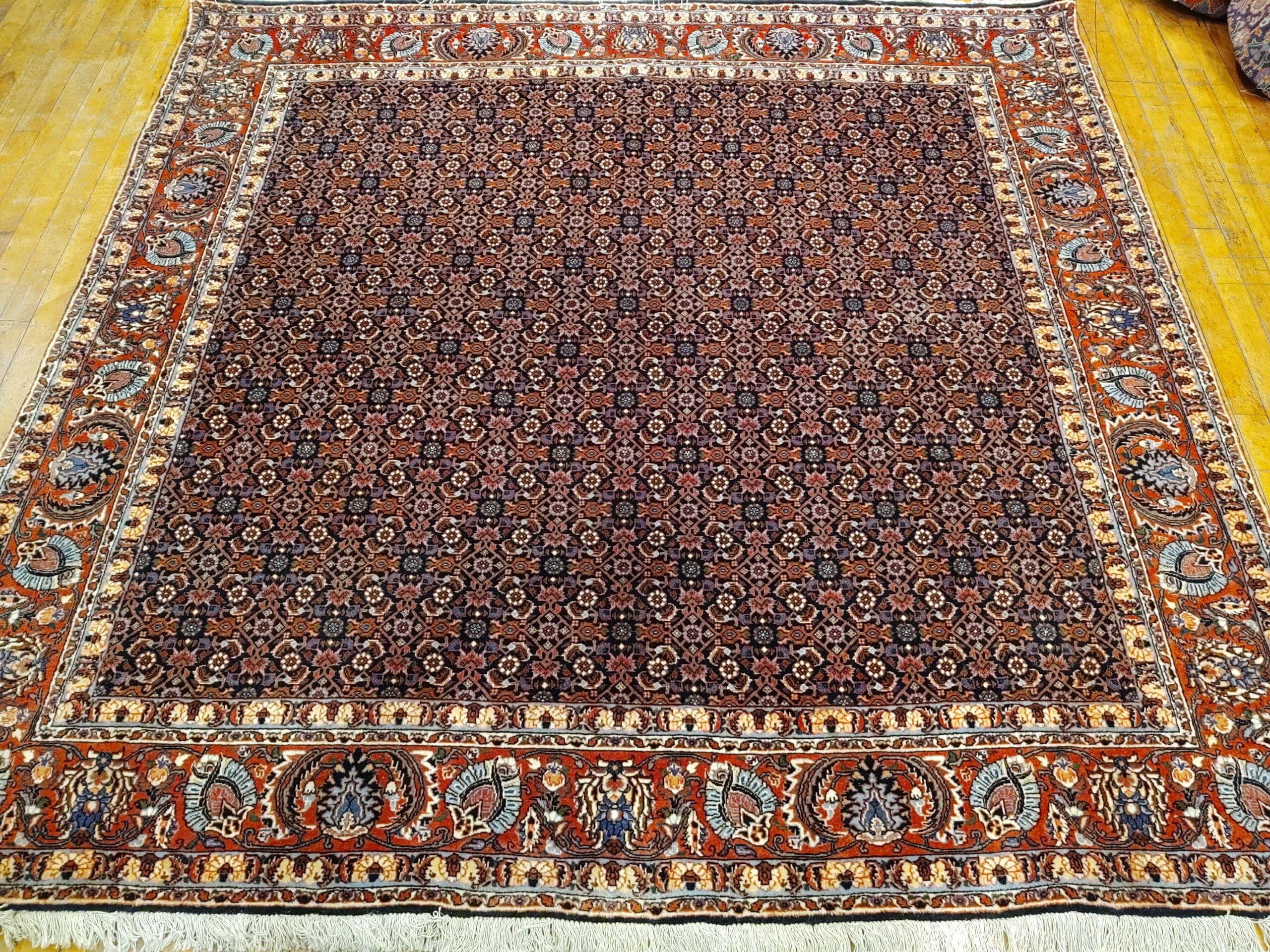
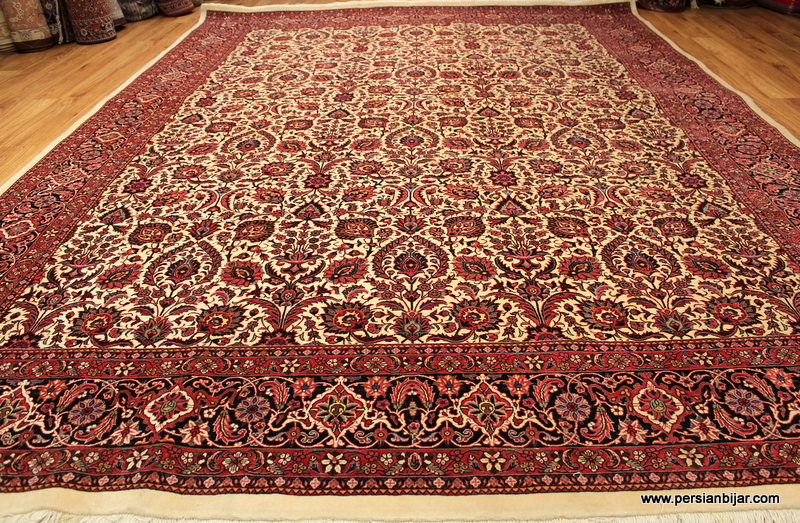
Style: Bijar- Hereti
By Borokhim’s Oriental Rugs · Madison, Wisconsin
A Bijar rug is a hand-knotted Persian rug woven in and around the town of Bijar, in the Kurdistan province of north-western Iran. It is known as the “Iron Rug of Persia” because of the way it is made: the weavers pack every row of knots so tightly that the finished rug is heavier, stiffer and harder-wearing than almost any other hand-made carpet in the world.
We have sold and cared for Bijar rugs on Monroe Street since 1972, and they are still the rugs customers ask us about most. This guide explains where they come from, how they are woven, how to recognize a genuine one, and how to look after it.
| Origin | Bijar and the surrounding villages, Kurdistan province, Iran |
| Also spelled | Bidjar |
| Nickname | The Iron Rug of Persia |
| Weavers | Mostly Kurdish families, with Afshar villages to the north |
| Construction | Hand-knotted wool pile, traditionally with the symmetric (Turkish) knot, wefts packed down while damp |
| Foundation | Wool in older pieces, cotton in most rugs from the twentieth century onward |
| Signature pattern | Herati, also called mahi or “fish” |
| Best for | Busy rooms: halls, dining rooms, family rooms, stairs |
Where Bijar rugs come from
Bijar is a small market town in the hills of Iranian Kurdistan, historically the center of a district called Garrus. Rugs have been woven there, and in dozens of villages around it, for centuries. Most of the weavers are Kurdish. To the north, around Tekab, Afshar villages weave rugs in the same sturdy tradition, which is why you will see pieces described as “Afshar Bijar”.
By the nineteenth century Bijar was already known across Persia for carpets that simply did not wear out. Large, finely drawn pieces were woven for wealthy households, and later for export to Europe and America, where their toughness suited homes with hard floors and heavy furniture.
Bijar is also famous for its samplers, called wagireh. A wagireh is a small rug that shows a section of a field pattern and a few borders side by side. Weavers used them as a pattern book, and merchants used them to show customers what could be ordered. They are collected today in their own right.
Why it is called the Iron Rug of Persia
The name comes from the weaving method, not from the design. Most hand-knotted rugs are woven dry. A Bijar is not.
- The wool is dampened.The weaver wets the wefts, the threads that run across the rug between each row of knots, before they go in.
- Each row is beaten down hard.After a row of knots is tied, the wefts are hammered into place with a heavy metal comb. In a Bijar this is done with far more force than in other weaving towns.
- The rug tightens as it dries.Damp wool shrinks slightly as it dries, so the knots are squeezed together even more firmly once the row is finished.
The result is a foundation so compact that the pile stands almost upright and has very little room to bend or crush. That is why a Bijar feels like a board when you try to fold it, and why one that has spent eighty years under a dining table can still look crisp.
The classic Bijar patterns
Bijar weavers work from a handful of designs that have been repeated and refined for generations. These are the ones you will meet most often.
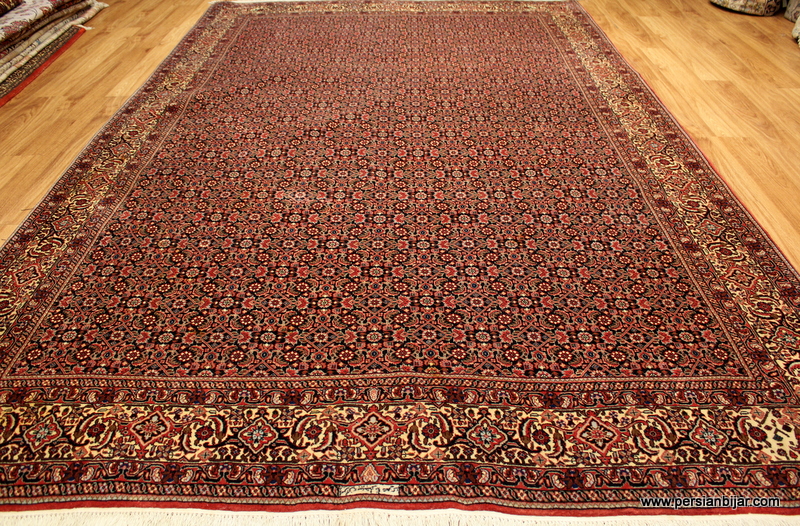
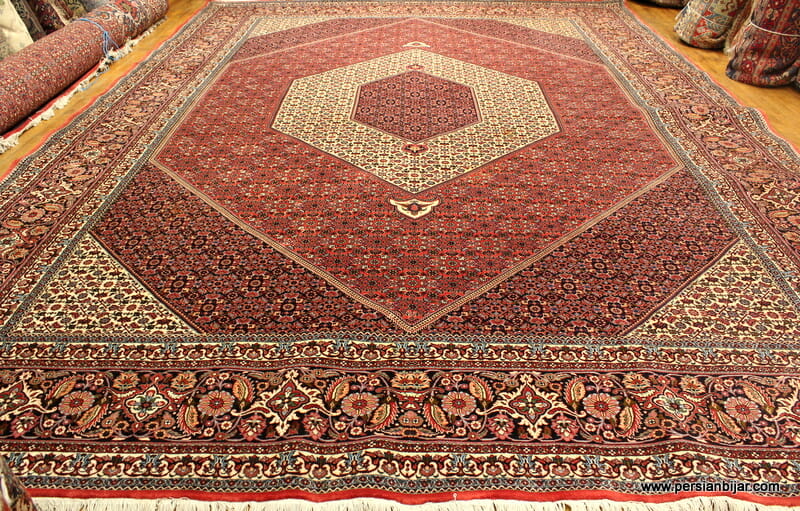
Colors are strong and settled rather than bright: madder red, indigo and navy blue, ivory, with touches of green, gold, light blue and rose. In older rugs you will often see gentle bands where the shade of one color shifts. This is called abrash. It comes from wool dyed in small batches, and it is a sign of hand work, not a fault.
How to recognize a genuine Bijar
The Herati pattern has been copied in many countries, so the design alone proves nothing. A real Bijar is identified by how it is built. These are the checks we make in the shop.
- Lift a corner.A Bijar is noticeably heavier than another rug of the same size. If it feels light, be cautious.
- Try to bend it.It should resist. The rug feels firm and board-like, and it wants to roll, not fold.
- Turn it over.The back is hard and tightly packed. The knots sit shoulder to shoulder and barely move when you push them with a thumbnail.
- Press the pile.The wool is dense and springs straight back. You should not be able to work your fingers easily down to the foundation.
- Look at the drawing and color.Expect a classic pattern, clearly drawn, in deep reds and blues. Small irregularities are normal in a hand-knotted rug.
- Ask where and when it was woven.A good dealer will tell you the origin, the approximate age, the foundation material and any repairs, and will put it in writing.
Rugs sold as “Indo-Bijar” or “Bijar design” are woven elsewhere using Bijar patterns. Some are well made and good value, but they do not have the wet-packed structure, so they will not feel or wear the same way. There is nothing wrong with buying one, as long as you know which you are buying.
Antique and newer Bijars
Older Bijars, broadly those woven before the early twentieth century, usually have a wool foundation and vegetable dyes. They can be slightly irregular in shape, and their colors have had a century or more to mellow. Collectors value them highly.
Most later Bijars are woven on cotton, which keeps the rug flatter and squarer on the floor. The wool pile and the packing technique are the same. A well-made Bijar from the middle or late twentieth century is one of the most practical hand-knotted rugs you can own, and it has many decades of use ahead of it.
Where a Bijar works best in a home
Because they shrug off foot traffic, Bijars go where other fine rugs struggle:
- Dining rooms. The dense pile stands up to chairs being dragged in and out every day.
- Hallways and stairs. Bijar runners are a traditional choice for exactly this reason.
- Family rooms. Children, pets and heavy furniture leave less of a mark than on a softer rug.
- Entryways. A small Bijar mat by the door will outlast a long series of machine-made ones.
The dense weave also means a Bijar lies flat and stays put, with edges that are less likely to curl.
Caring for a Bijar rug
- Roll it for moving or storage. Never fold it.
- Rotate it end for end every year or two so wear and sunlight are spread evenly.
- Use a good rug pad. It protects the foundation and stops the rug sliding on a hard floor.
- Vacuum with suction only. Turn off the beater bar and keep the vacuum away from the fringe.
- Blot spills straight away with a clean white cloth. Do not scrub, and avoid household carpet cleaners.
- Have it washed professionally every few years by someone who works with hand-knotted rugs. Steam cleaning is not suitable.
We clean, repair and appraise hand-knotted rugs in Madison. If you already own a Bijar and are not sure of its age or condition, get in touch and we will be glad to look at it.
Common questions about Bijar rugs
Are Bijar rugs good quality?
Yes. They are widely regarded as the most durable of all Persian rugs. A properly cared-for Bijar will normally outlast the people who bought it.
Why is my Bijar rug so stiff?
That stiffness is the point. It comes from damp wefts being beaten down hard during weaving, which packs the knots together. A soft, floppy rug in a Bijar pattern was almost certainly woven somewhere else.
Is Bidjar the same as Bijar?
Yes. Bidjar is an older European spelling of the same town. You may also see Bidzhar. They all refer to the same rugs.
How long does a Bijar rug last?
Generations. It is common for us to see Bijars from the 1920s and 1930s that are still in daily use and still have plenty of pile.
See Bijar rugs in person
Borokhim’s carries one of the largest selections of Bijar rugs in the United States, from room-size antiques to small mats and runners. Browse the collection online, or visit the showroom at 1801 Monroe Street, Madison.
