 Borokhim's Oriental Rugs on
Bijar Rug Size Guide: How to Choose the Right Size for Every Room

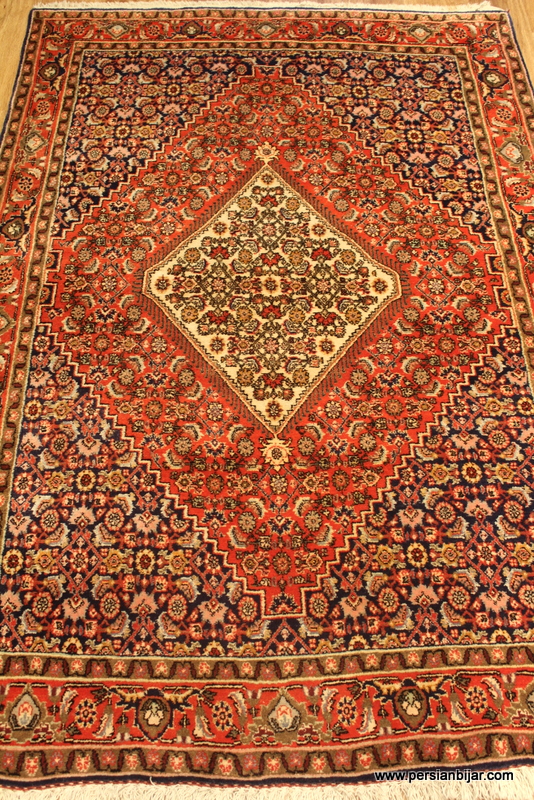
Style: Bijar-Halvaie
By Borokhim’s Oriental Rugs · Madison, Wisconsin
Size matters more than pattern. A beautiful Bijar that is a foot too small will always look wrong, and one that is the right size will make the whole room feel settled. This guide gives simple measuring rules for each room, in feet and inches.
One thing to know first: hand-knotted rugs do not come in exact standard sizes. A Bijar sold as a “6 by 9” might measure 6’7″ by 10’1″. Treat the sizes below as ranges, and always check the measured size of the rug you are considering.
| 2×3 to 3×5 | Entry mats, bedside, in front of a sink or hearth |
| 4×6 to 5×8 | Foyers, home offices, small sitting areas |
| 6×9 to 7×10 | Smaller living rooms, breakfast rooms, queen bedrooms |
| 8×10 to 9×12 | Most living rooms, dining tables for six to eight, king bedrooms |
| 10×13 and larger | Great rooms and large formal dining rooms |
| Runners | About 2’6″ to 3′ wide and 8′ to 14′ or more long, for halls, stairs and galley kitchens |
| Long “gallery” sizes | About 5′ to 7′ wide and 12′ or more long, for long rooms and wide hallways |
Dining room
This is the room where a Bijar earns its name. The pile is so dense that chairs slide across it without dragging the rug or leaving lasting dents.
The rule: the rug should extend at least 24 inches beyond the table on every side, so that a chair stays fully on the rug when someone pushes back from the table. In practice, add four feet to the length and four feet to the width of your table.
- Table for four (about 3′ by 4′): a rug of roughly 6 by 9.
- Table for six (about 3′ by 6′): a rug of roughly 8 by 10.
- Table for eight (about 3’6″ by 7′): a rug of roughly 9 by 12.
- Table with leaves: measure it fully extended.
Living room
There are two layouts that work.
Whichever you choose, leave a border of bare floor between the rug and the walls. Twelve to eighteen inches is typical. In a small room, eight inches is enough.
The layout to avoid is a small rug floating in the middle of the room with no furniture touching it.

Bedroom
The aim is to step out of bed onto wool. The rug should reach 18 to 24 inches beyond each side of the bed and beyond the foot.
- Queen bed: an 8 by 10, laid across the room under the lower two-thirds of the bed.
- King bed: a 9 by 12.
- Another approach: a runner or a small rug on each side of the bed, and perhaps one at the foot. This works well with Bijars, because they are made in so many small sizes.
Hallways and stairs
Bijar runners are a traditional choice for the hardest-working floors in the house.
- Width: leave four to six inches of floor showing on each side.
- Length: stop six to twelve inches short of each end of the hall. In a very long hallway, two runners with a gap between them often look better than one.
- Wide halls and long rooms: look at the long gallery sizes, which are wider than a runner and can be thirteen feet or more in length.
- Stairs: a runner on stairs should be fitted by a professional installer, with padding on each tread.


Entry, kitchen and small spaces
Small Bijars, from about 2 by 3 up to 4 by 6, bring the same durability to the places that take the most punishment: inside the front door, in front of the kitchen sink, at the back door.
How to measure a room
- Mark it out.Use painter’s tape on the floor to outline the size you have in mind. Live with it for a day and walk around it.
- Measure the furniture, not just the floor.Note the size of the dining table fully extended, or the footprint of the seating group.
- Check doors, vents and outlets.Note anything the rug must clear or should not cover.
- Write down a range.Record the largest and the smallest size that would work, in feet and inches. Hand-knotted rugs vary, and a range gives you far more to choose from.
- Take a photo.A picture of the room with the tape in place helps a dealer suggest the right rug.
Things that are particular to Bijars
- They are heavy. A room-size Bijar takes two people to move. Plan where it is going before it is unrolled.
- They lie flat. The stiff foundation means corners and edges are less likely to curl, which helps in doorways and walkways.
- They must be rolled, never folded, for moving or storage.
- The pad should be slightly smaller than the rug, about an inch less on each side, so that it does not show.
- Older pieces can be a little irregular. One end of an antique may be an inch or two wider than the other. Measure both.
Common questions
What is the most popular Bijar rug size?
For living and dining rooms, 8 by 10 and 9 by 12. Runners and small mats are the most common second purchase.
Should a rug go under all the furniture?
Not necessarily. Having at least the front legs of each main piece on the rug is enough to tie a room together.
Can I use a Bijar in a kitchen?
Yes. A small Bijar or a runner does well in a kitchen. Blot spills promptly and use a pad that grips the floor.
Do Bijar rugs come in square or round shapes?
Squares turn up from time to time. Round Bijars are rare. If you need a round rug, a Tabriz is more likely to have one.
Find a Bijar in your size
Every rug in our collection is listed with its measured size. If you send us your room dimensions, we will suggest rugs that fit.
