 Borokhim's Oriental Rugs on
How to Buy a Bijar Rug Online: A Checklist for U.S. Buyers
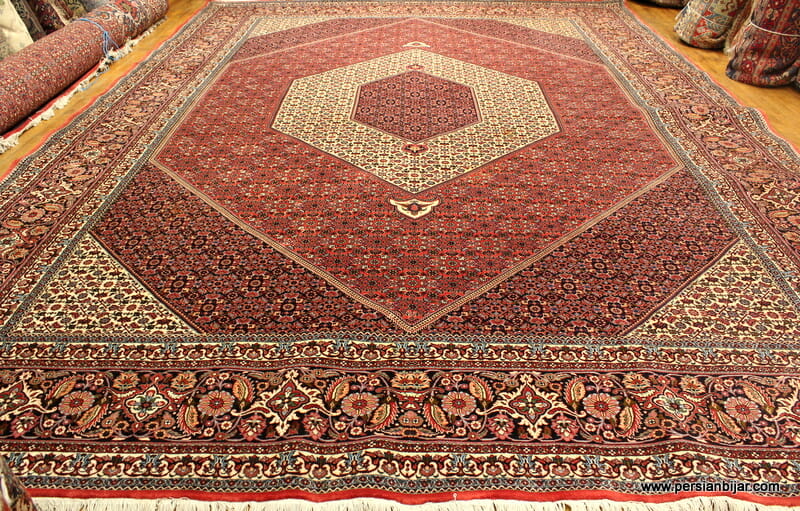
Style: Bijar- Afshar
By Borokhim’s Oriental Rugs · Madison, Wisconsin
You do not need to live near a specialist dealer to own a genuine Bijar rug. Many buyers across the United States now choose and buy one without ever visiting a showroom. A Bijar is well suited to buying at a distance, because its quality shows in things that can be photographed, measured and weighed.
This checklist covers what to ask for before you pay, the warning signs to watch for, and how to judge the dealer as well as the rug.
| Know your size | Measure the room and decide the largest and smallest rug that would work. Our Bijar rug size guide has the rules for each room. |
| Know the rug | Read what a Bijar rug is so you know what a genuine one should look and feel like. |
| Expect to talk | A good dealer will want a conversation. Treat a seller who will not pick up the phone as a warning sign. |
Why genuine Bijars are in limited supply in the U.S.
As of this writing, United States sanctions bar new imports of rugs made in Iran, and have done since 2018. Persian rugs that were lawfully brought into the country before then can still be bought and sold here.
For a buyer, this means the genuine Bijars available in America are the ones already here, in dealers’ inventories and in private homes. It is one reason to buy from an established dealer with deep stock and a long record, and to be careful with sellers who are vague about where a rug was woven.
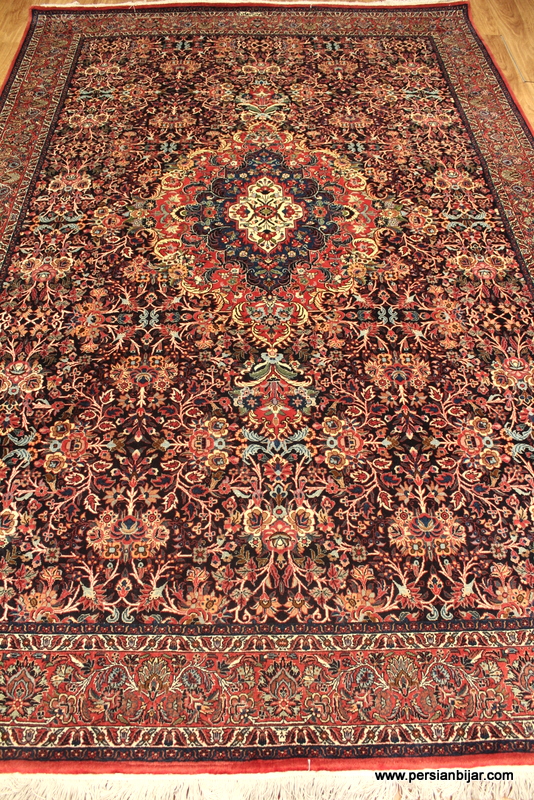
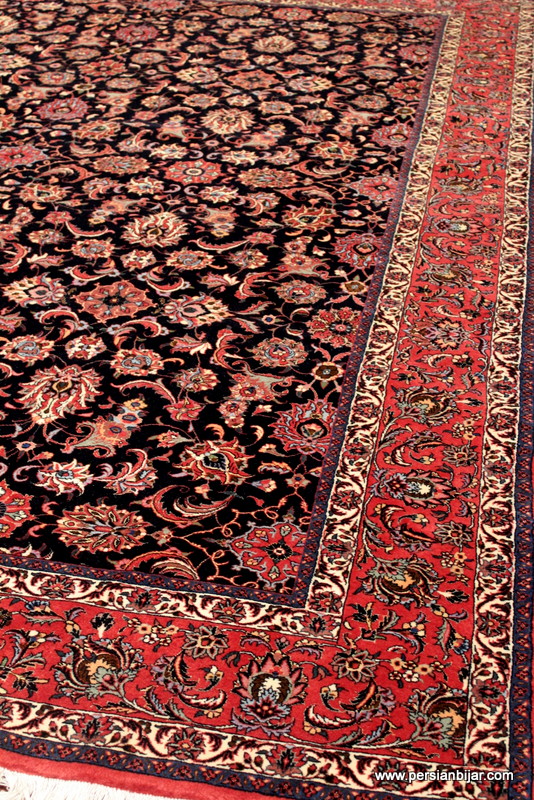
The 10-point checklist
- Confirm it is hand-knotted, and woven in Iran.Ask the question directly and get the answer in writing. “Bijar design”, “Bijar style” and “Indo-Bijar” describe rugs woven elsewhere using Bijar patterns.
- Ask for the right photographs.You want the whole rug from above, each corner, both ends with the fringe, the side edges, and the back. A close-up of the back with a ruler laid across it tells you more than any description.
- Get the exact size in feet and inches.Hand-knotted rugs do not come in standard sizes. A rug listed as 8 by 10 may really be 8’3″ by 11’4″. A few inches can decide whether it fits.
- Ask the age and the foundation.An approximate date is fine. Ask whether the foundation is wool or cotton. Older Bijars are usually on wool, later ones on cotton.
- Ask for a condition report.It should mention the evenness of the pile, any worn areas, repairs or reweaving, moth damage, stains, color run, and the state of the fringe and side cords. Old rugs are allowed to have a history. You are entitled to know it.
- Ask what it weighs.A Bijar is noticeably heavier than other rugs of the same size. A rug described as a Bijar that ships light deserves a second look.
- Check the color.Screens vary. Ask for photos or a short video in daylight, and ask whether the rug has abrash, the gentle bands of shade that come from hand-dyed wool.
- Understand the terms before you pay.Ask whether you can return the rug, how many days you have, who pays for return shipping, and how the refund is made. Get the answers in writing.
- Ask how it will be shipped.A Bijar must be rolled, never folded, then wrapped, insured for its full value and sent with tracking.
- Check the dealer.Look for a physical showroom, many years in business, independent reviews, and a phone answered by someone who knows the rugs.
Warning signs
- No photograph of the back. The back is where a hand-knotted rug proves itself.
- Vague origin. “Persian style” or “Oriental design” is not the same as woven in Iran.
- A permanent closing-down sale. Liquidation sales that never end are an old trick in the rug trade.
- No return terms, or terms the seller will not put in writing.
- Pressure to decide today. A rug that has lasted eighty years will still be good next week.
What a good description looks like
When you have asked the questions above, you should be holding something like this:
If a seller cannot give you that much, keep looking.
When the rug arrives
- Unroll it on a clean floor and let it relax for a day. Any curl from shipping will settle.
- Check it against the photos and the description while you are still inside the return period.
- Look at it in daylight and in the evening. Wool changes character with the light, and with the direction you view it from.
- Put a good pad under it. It protects the rug and keeps it in place.
Buying from Borokhim’s
Every rug on this website is in our Madison showroom and is photographed there, with its size listed. Albert Borokhim has bought, sold and appraised Persian rugs since 1972, and Bijars are our specialty.
If you see a rug you like, contact us with its number. We will send more photographs, describe its age and condition, give you the price, and explain how we would ship it to you. We send rugs to customers across the United States.
Common questions
Is it safe to buy a Persian rug online?
Yes, if you buy from an established dealer, see detailed photographs including the back, and have the origin, condition and return terms in writing.
Is it legal to buy a Persian rug in the United States?
Yes. Persian rugs that were lawfully imported before the current restrictions can be bought and sold within the United States. The restriction applies to importing new ones from Iran.
Can a Bijar rug be shipped safely?
Yes. It is rolled, wrapped and insured. It should never be folded, because the foundation is too stiff.
Why are there no standard sizes?
Each rug is tied by hand on its own loom, so the finished size varies by a few inches. Always work from the measured size.
Start with the collection
Browse our Bijar rugs online, then call or write to us about the ones that interest you. We are glad to help buyers anywhere in the United States.
