 Borokhim's Oriental Rugs on
Kazak Rugs: Bold Caucasian Designs, Old and New
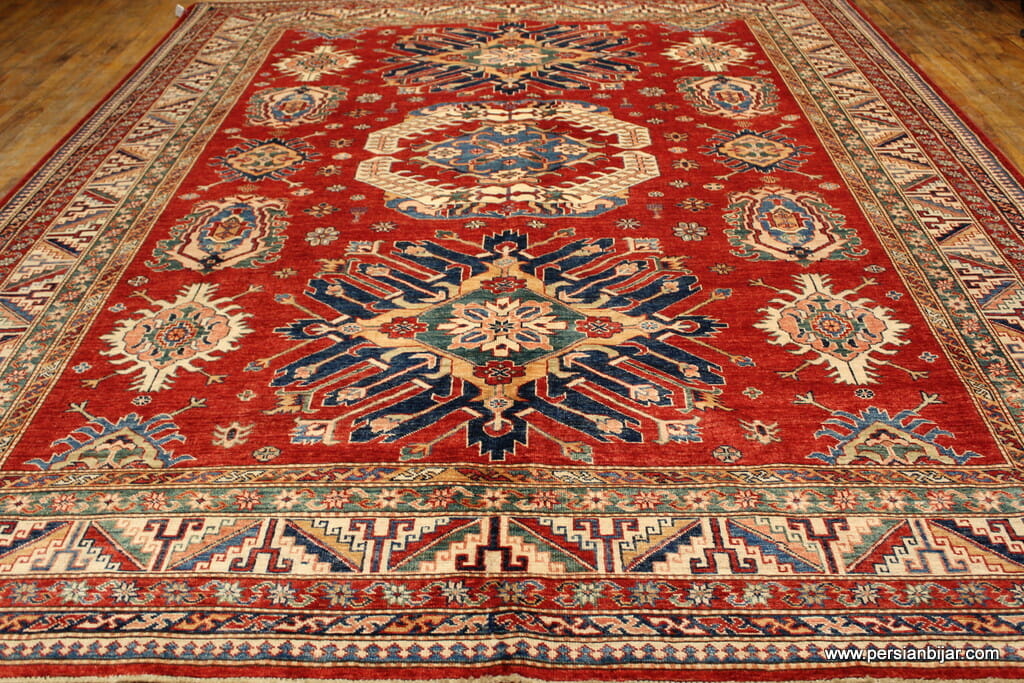
Style: Super Kazak
By Borokhim’s Oriental Rugs · Madison, Wisconsin
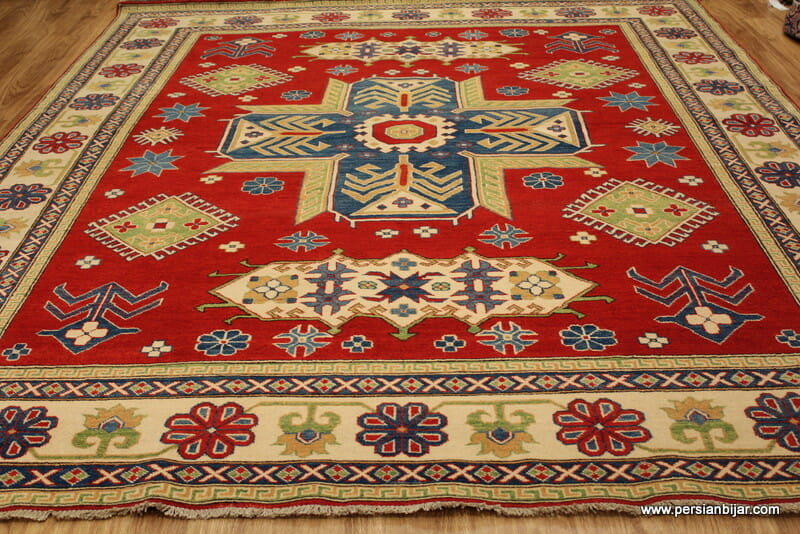
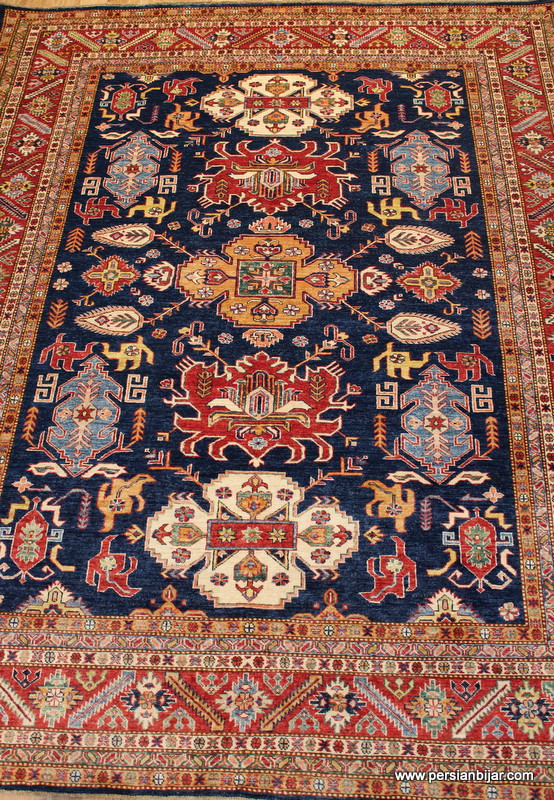
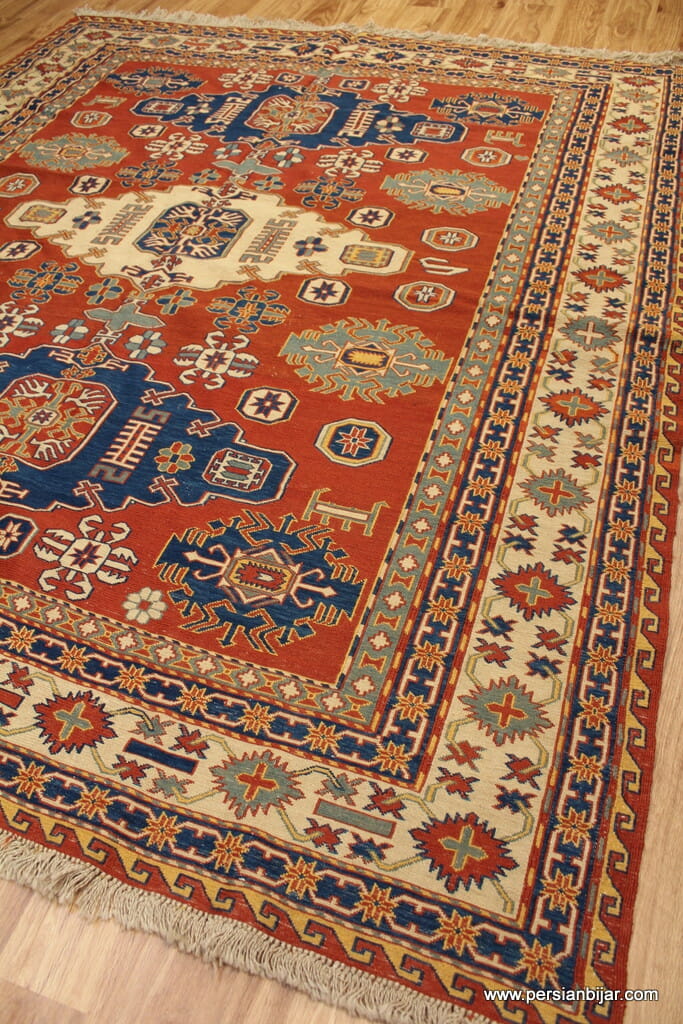
Kazak rugs are the boldest rugs on the floor. Big stepped medallions, hooked diamonds and eight-pointed stars, drawn in strong red, blue, ivory, gold and green, with nothing delicate about them. They come from the tribal weaving tradition of the Caucasus, and they are woven today by a new generation of weavers in Afghanistan and Pakistan.
This guide explains where the Kazak style began, the difference between antique and newer Kazaks, and where they work best in a home.
| Style from | The Caucasus, the mountain region between the Black Sea and the Caspian Sea |
| Woven today in | Afghanistan, Pakistan and other weaving regions |
| Look | Large geometric medallions and tribal motifs |
| Colors | Red, blue, ivory, gold and green, strongly contrasted |
| Materials | Wool pile, on wool in antique pieces and on cotton or wool in newer ones |
| Knot | Symmetric (Turkish) |
| Best for | Living rooms, family rooms, halls, and anywhere that needs color |
Where the Kazak style began
The Caucasus is a region of high mountains and many peoples, in what is now Armenia, Azerbaijan and Georgia. In the 1800s the villages in its south-western corner wove rugs with a character all their own: thick, glossy wool, a small number of large motifs, and colors of great strength.
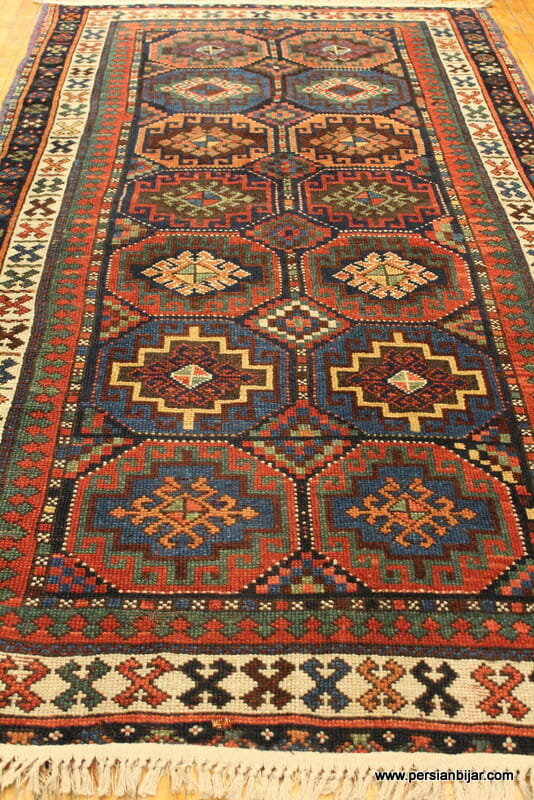
Dealers called these rugs Kazaks. Despite the name, they have nothing to do with Kazakhstan. Collectors divide the old rugs by the districts and villages that made them, with names such as Bordjalou, Karachov, Fachralo and Lori-Pambak, each with its own favorite medallion.
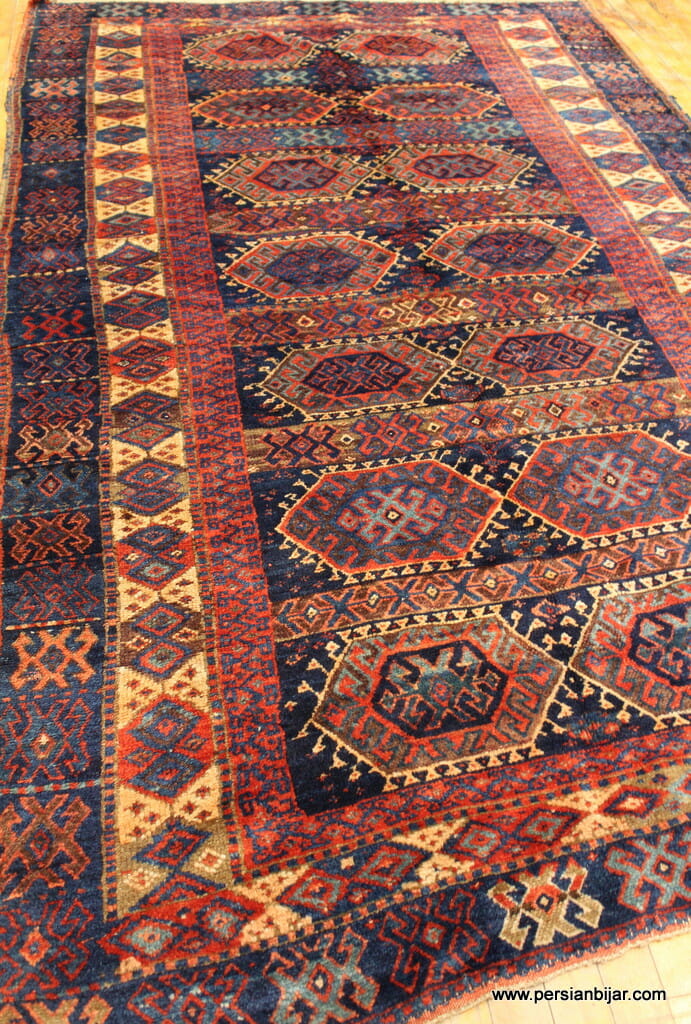
Genuine antique Kazaks are now scarce and keenly collected.
Kazaks today
The Kazak rugs most people buy now are hand-knotted in Afghanistan and Pakistan, a tradition that has grown strongly since the 1990s. The weavers work from the old Caucasian designs, using handspun wool and, in the better pieces, natural dyes.
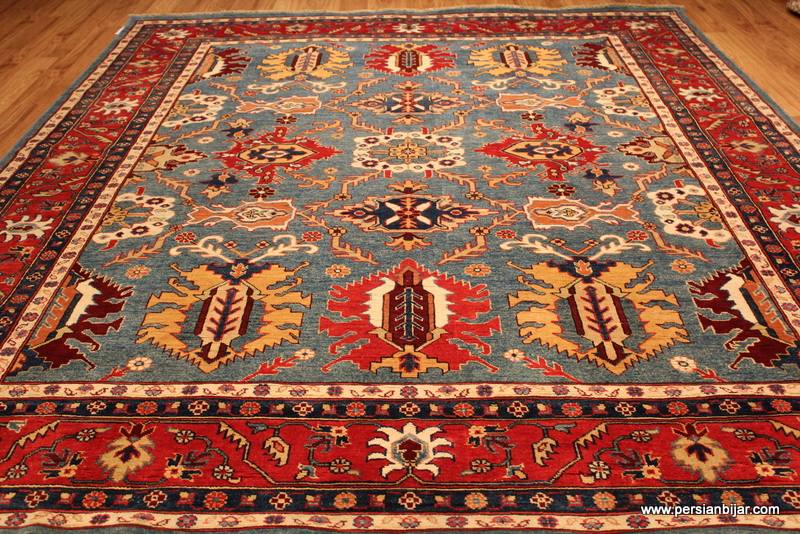
These are well-made rugs. The wool is good, the weave is firm, and the colors are clear and lively. You may see the term Super Kazak, which the trade uses for a finer grade with tighter knotting and crisper drawing.
| Antique Kazak | Newer Kazak | |
|---|---|---|
| Woven in | The Caucasus, 1800s to early 1900s | Afghanistan, Pakistan and elsewhere |
| Foundation | Wool | Cotton or wool |
| Pile | Long and glossy | Medium, even, neatly clipped |
| Drawing | Bold and a little irregular | Crisp and symmetrical |
| Sizes | Mostly small and medium | All sizes, including room-size and runners |
| Bought for | Collecting and display | Everyday living |
Motifs to look for
Where a Kazak works best
A Kazak brings energy to a room. It suits a family room or living room with plain upholstery, a rustic or lodge-style interior, and equally a modern space that needs one strong piece of pattern. The geometric drawing sits happily beside contemporary art.
Because newer Kazaks are woven in so many sizes, they are a popular choice for hallway runners, where the repeating medallions lead the eye down the hall.
How to choose a Kazak
- Ask where and when it was woven.An antique Caucasian Kazak and a newer Afghan or Pakistani Kazak are very different purchases.
- Feel the wool.Good Kazak wool is dense and slightly lustrous.
- Look at the colors together.They should be strong but in harmony, with no color that looks harsh or chemical.
- Check the back.The weave should be firm, with the design clearly visible.
- Consider the scale.Large medallions need space. In a small room, choose a rug with smaller, repeated motifs.
Common questions
Are Kazak rugs from Kazakhstan?
No. The name belongs to a style that began in the Caucasus. Most Kazak rugs sold today are woven in Afghanistan and Pakistan.
Are Kazak rugs durable?
Yes. They are firmly woven in good wool and stand up well to family use.
What is a Super Kazak?
A trade name for a finer grade of newer Kazak, with tighter knotting and more detailed drawing.
Is a Kazak a Persian rug?
No. It is an Oriental rug in the Caucasian tradition, not a rug from Iran.
See our Kazak rugs
Borokhim’s Oriental Rugs has served Madison since 1972. Browse our hand-knotted Kazak rugs and runners online.
