 Borokhim's Oriental Rugs on
Persian Tabriz Rugs: Mahi, Medallion and What “Raj” Means
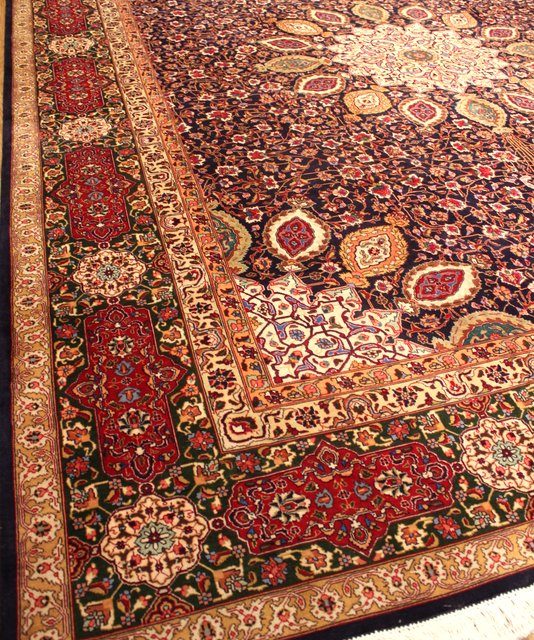
Style: Tabriz
By Borokhim’s Oriental Rugs · Madison, Wisconsin
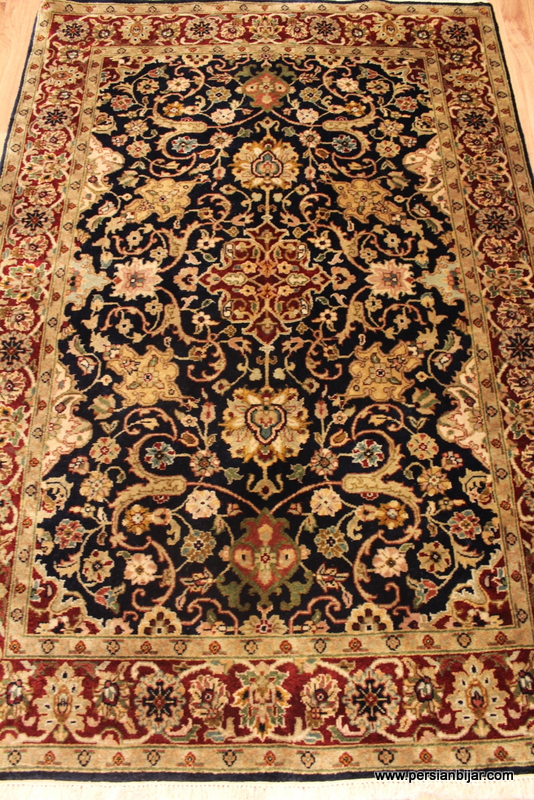
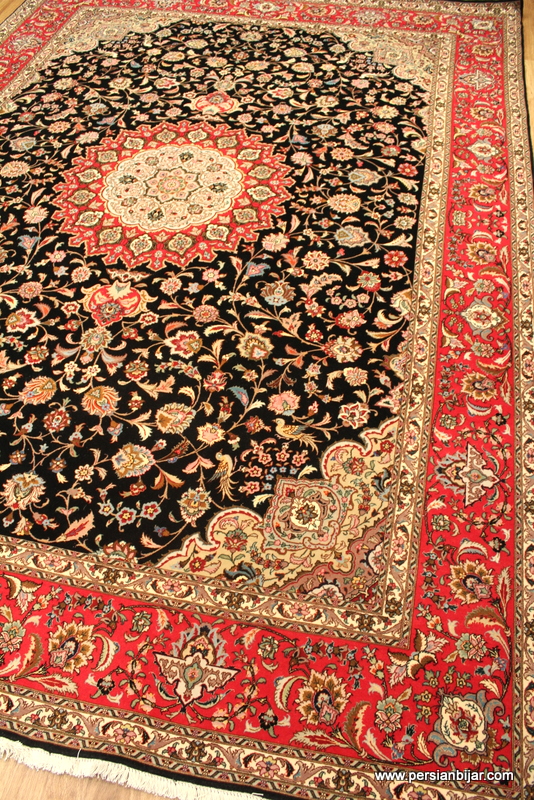
Tabriz is one of the oldest and most accomplished rug-weaving cities in the world. Its workshops produce a wider range of designs than almost anywhere else in Iran, from quiet all-over patterns to grand medallions and woven pictures, and all of them share the same crisp, precise drawing.
This guide explains the main Tabriz designs, including the famous Mahi, what dealers mean by “raj”, and how to judge the quality of a Tabriz rug.
| Woven in | The city of Tabriz, East Azerbaijan province, north-western Iran |
| Look | Fine, detailed, mostly curving designs |
| Materials | Fine wool, often with silk highlights, on a cotton or silk foundation |
| Knot | Symmetric (Turkish), traditionally tied with a small hook |
| Quality measure | Raj: the higher the number, the finer the rug |
| Sizes | Everything from small mats to very large carpets, including rounds and squares |
| Best for | Formal living and dining rooms, bedrooms, studies |
A city of weavers
Tabriz sits in the far north-west of Iran, on the old trade routes to Turkey and the Caucasus. Rugs have been woven there for centuries, and in the late 1800s its merchants led the revival of Persian carpet weaving for export to Europe and America.
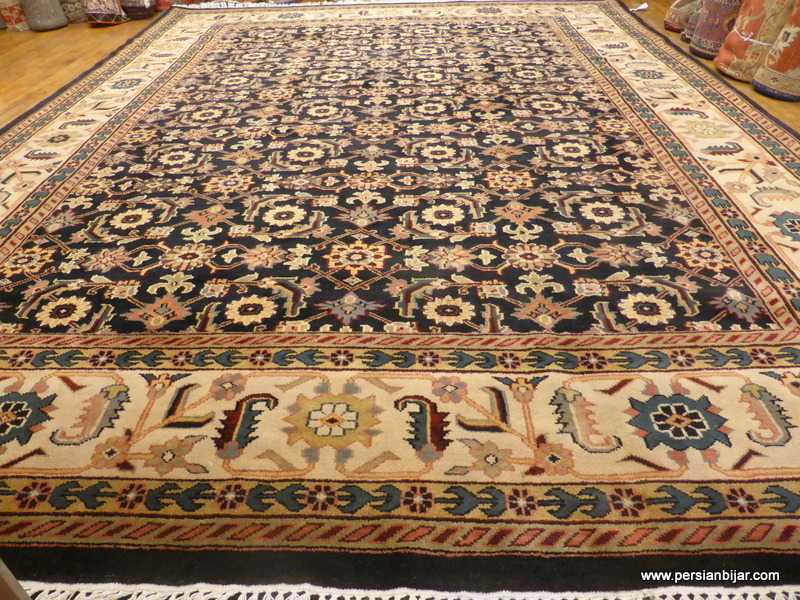
Unlike village rugs, Tabriz rugs are workshop pieces. A designer draws the pattern on paper, knot by knot, and skilled weavers follow it exactly. That is why a Tabriz looks so even and symmetrical compared with a village rug such as a Heriz, which is woven only a short distance away.
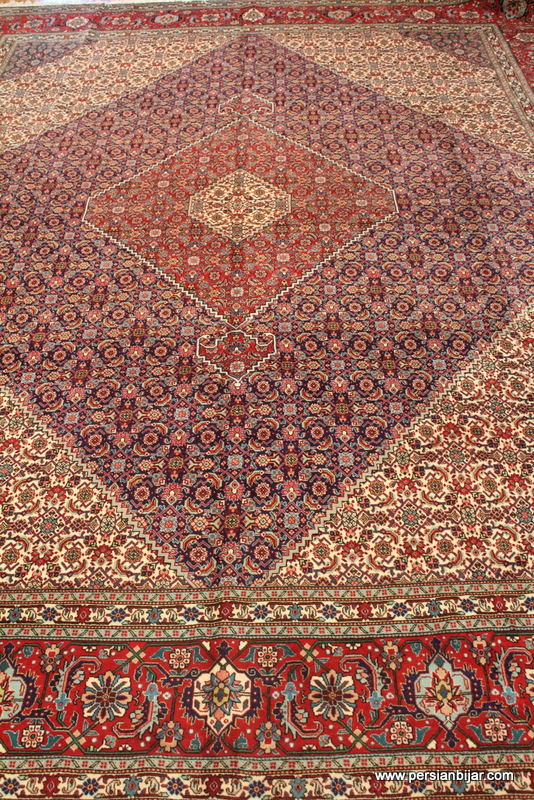
The main Tabriz designs
What “raj” means
Tabriz rugs are graded by a measure called raj. It is the number of knots across a span of about two and three-quarter inches. A 40 raj rug has 40 knots in that span, a 50 raj rug has 50, and so on.
- 40 raj: a good everyday quality, sturdy and clearly drawn.
- 50 raj: fine. This is the grade most often seen in better Mahi rugs.
- 60 raj and above: very fine, usually with silk highlights and sometimes a silk foundation.
A higher raj means more knots, more months on the loom and sharper detail. It also means a thinner, more supple rug.
Wool, silk and the Tabriz hook
The pile is fine wool. In better pieces the outlines of the flowers are picked out in silk, which catches the light and makes the pattern seem to glow against the wool. You can see it by tilting the rug toward a window.
Tabriz weavers tie their knots with a small hooked knife, not with their fingers alone. It lets them work quickly and pack the knots tightly, and it is one reason the weave is so even.
How to judge a Tabriz
- Turn it over.The pattern should be as sharp on the back as on the front, and the knots small and even.
- Ask the raj.A dealer should be able to tell you, and show you how it is counted.
- Look for silk.Tilt the rug in the light. Silk outlines shine where the wool does not.
- Check the drawing.Curves should be smooth, with no jagged steps, and the two halves of the design should match.
- Feel the handle.A fine Tabriz is thin and flexible, with a short, velvety pile.
Where a Tabriz belongs
The fine detail of a Tabriz rewards a closer look, so it suits rooms where people sit and talk: a formal living room, a dining room, a study, a master bedroom. A Mahi Tabriz is especially practical, because the small pattern hides everyday marks and works under furniture.
The finest pieces are best kept out of the heaviest traffic. For a busy hallway or family room, a Bijar or Heriz is the tougher choice. Our comparison of Bijar, Heriz and Tabriz rugs explains the differences.
Common questions
What is a Mahi Tabriz?
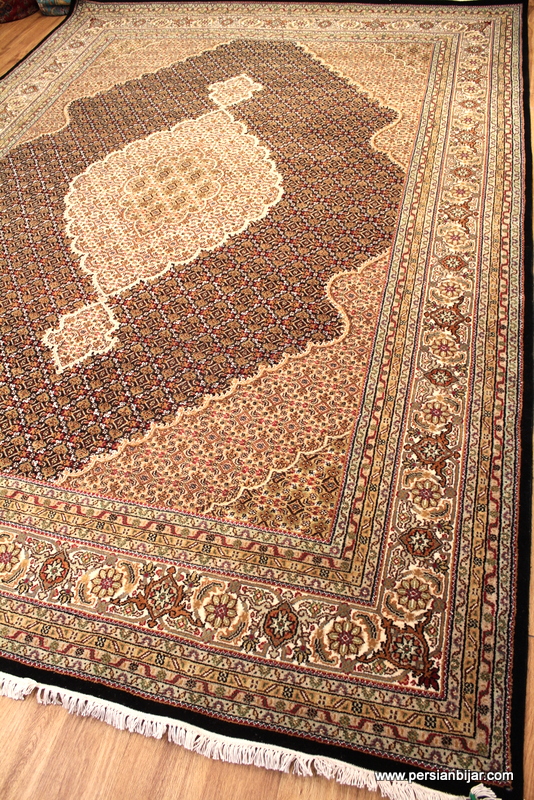
A Tabriz rug woven in the Mahi, or fish, pattern: a small diamond with four curled leaves around it, repeated over the whole field.
Is a higher raj always better?
It is finer and more valuable, but not always more practical. A 40 or 50 raj rug is often the better choice for a room that gets daily use.
Do Tabriz rugs contain silk?
Many do. Silk is used for highlights in the pattern, and the finest rugs are woven on a silk foundation.
How is a Tabriz different from a Heriz?
Both come from the same province. A Tabriz is a fine city rug with curving, precise drawing. A Heriz is a thicker village rug with bold, angular drawing.
See our Tabriz rugs
Borokhim’s Oriental Rugs has served Madison since 1972. Browse our Tabriz rugs online, including many Mahi designs, or ask us for help choosing one.
