 Borokhim's Oriental Rugs on
Kilim Rugs: How Flat-Woven Rugs Are Made and Where to Use Them
Style: Kilim
By Borokhim’s Oriental Rugs · Madison, Wisconsin
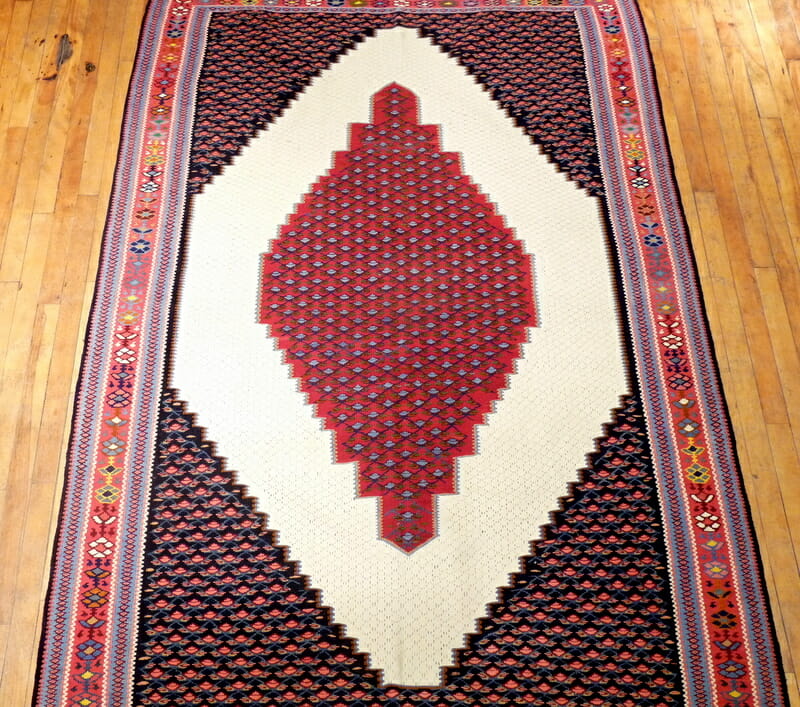
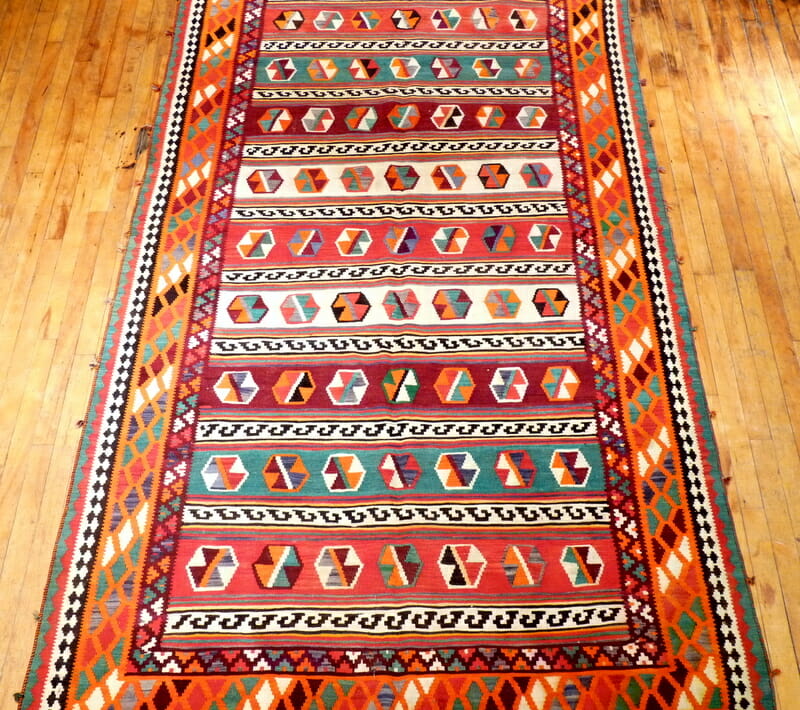
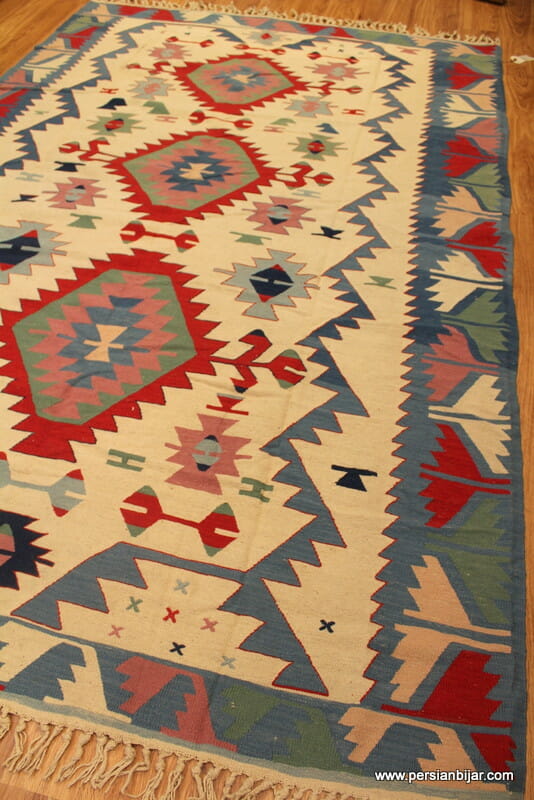
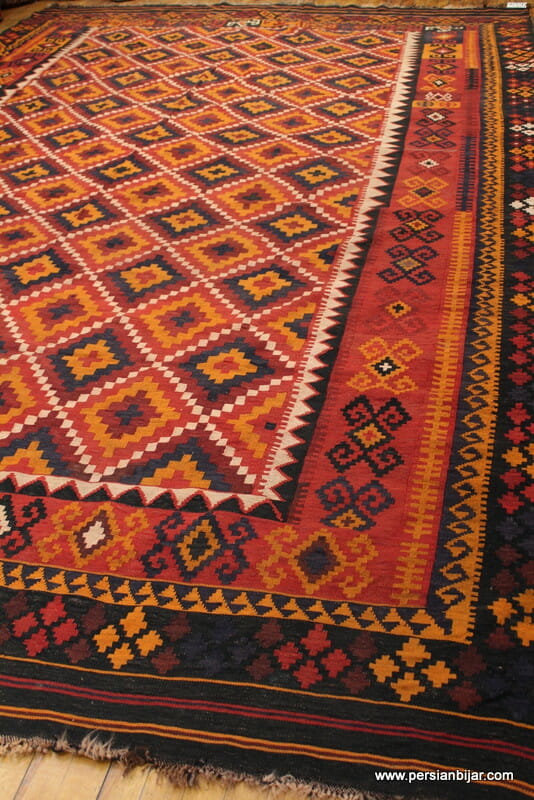
A Kilim is a rug with no pile. It is woven flat, like a tapestry, which makes it light, thin and the same on both sides. Kilims are some of the most colorful textiles in the rug world, covered in diamonds, stripes and angular symbols that tribal weavers have handed down for generations.
This guide explains how a Kilim is made, why its patterns look the way they do, and the best ways to use one at home.
| What it is | A flat-woven rug with no knots and no raised pile |
| Woven in | Persia, Turkey, Afghanistan, the Caucasus and Central Asia |
| Materials | Mostly wool, sometimes on a cotton foundation |
| Look | Geometric: diamonds, stripes, hooks and stepped shapes |
| Feel | Thin, light and flexible |
| Reversible | Yes. Both sides show the same pattern. |
| Best for | Bedrooms, studies, wall hangings, layering, lighter-use rooms |
How a Kilim is woven
A pile rug is made by tying thousands of knots onto a foundation and trimming the ends, which stand up to form the surface. A Kilim has no knots at all. The colored wool is simply woven over and under the foundation threads and packed down tightly until it hides them completely. The pattern is the weave itself.
That is why a Kilim is thin and why it looks the same from both sides.
Why the patterns are geometric
The weaver builds each block of color separately. Where two colors meet along a vertical line, the two yarns turn back on themselves and leave a small slit between them. To keep those slits short, and the rug strong, weavers avoid long vertical lines and work in diagonals and steps instead.
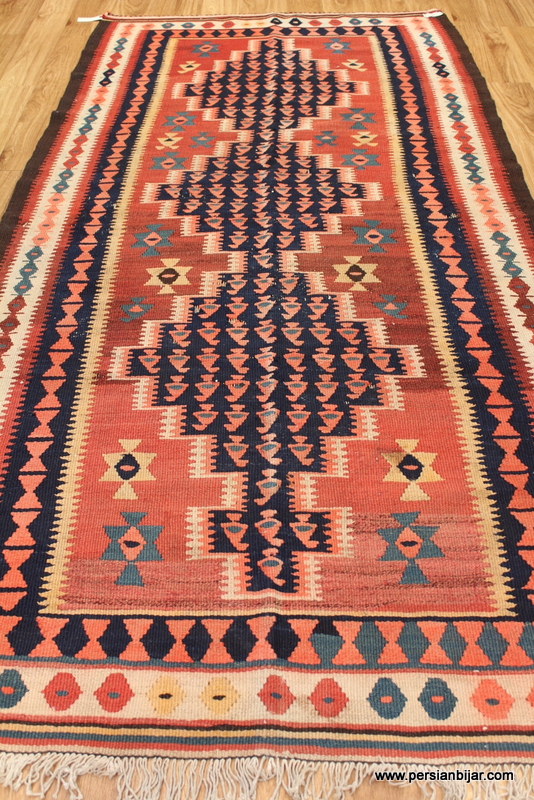
The result is the Kilim look: diamonds, zigzags, triangles and stepped medallions. What began as a technical limit became a whole artistic language.
The motifs and what they are said to mean
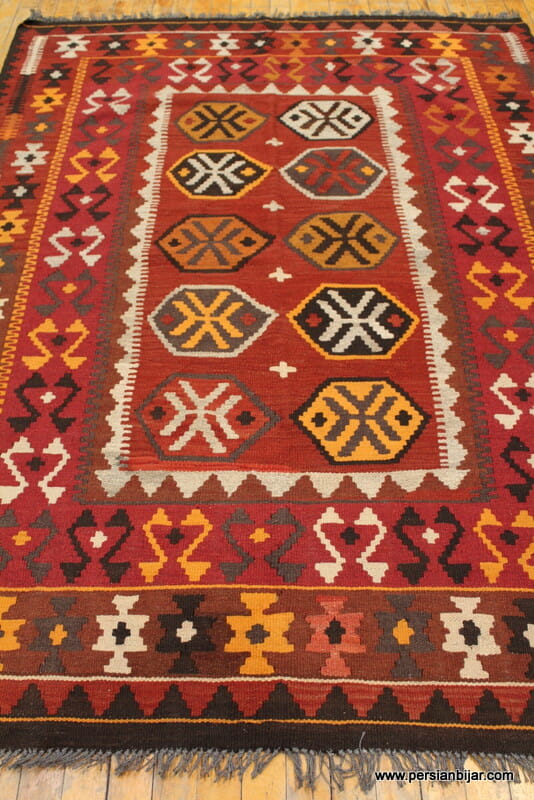
Kilim weavers work from memory, repeating motifs learned from their mothers and grandmothers. Many of these shapes carry traditional meanings.
Meanings vary from region to region, and a weaver may use a shape simply because she likes it. But they are part of what makes a Kilim more than a pattern.
Where Kilims are woven
Flat weaving is older than pile weaving, and it is practiced across a wide belt of country from Turkey through Persia and the Caucasus to Afghanistan and Central Asia. For nomadic and village families, Kilims were everyday textiles: floor covers, wall hangings, door flaps, blankets, and bags for carrying and storing goods.
Each region has its own style. Persian Kilims are often finely woven with small, dense patterns. Turkish Kilims tend toward large, bold motifs and strong color. Afghan Kilims are known for deep reds and browns.
Kilim or pile rug?
| Kilim | Pile rug | |
|---|---|---|
| Construction | Flat-woven, no knots | Hand-knotted, with a raised pile |
| Thickness | Thin and light | Thicker and heavier |
| Reversible | Yes | No |
| Feel | Firm and flat | Soft and cushioned |
| Wear | Good in light and moderate use | Best for heavy traffic |
| Needs a pad | Always, to stop it slipping | Recommended |
Ways to use a Kilim
- On the floor in a bedroom, study or sitting room. Always put a gripping pad underneath.
- Layered over a larger plain rug or carpet, for color and pattern.
- On the wall. A Kilim is light enough to hang, and it makes a striking piece of textile art.
- Over furniture, as a throw on a sofa, a bench or the end of a bed.
- Under a table, with some care. Chair legs can catch in the weave, so choose a tightly woven piece.
Caring for a Kilim
- Turn it over every few months. Using both sides doubles its life.
- Vacuum gently with suction only, on both sides.
- Shake small Kilims outdoors now and then to release dust.
- Blot spills at once. There is no pile to hide a stain.
- Have it washed by a specialist when it needs a full clean.
A close relative of the Kilim is the Soumak, a flat weave with a richer, embroidered look. See our guide to Soumak rugs.
Common questions
What is the difference between a Kilim and a rug?
A Kilim is a type of rug, but it is flat-woven and has no pile. Most other Oriental rugs are hand-knotted with a raised pile.
Are Kilim rugs durable?
Yes, for their weight. A well-woven wool Kilim lasts many years in a room with light or moderate use.
Can you use both sides of a Kilim?
Yes. A Kilim is reversible, and turning it regularly spreads the wear.
Do Kilims need a rug pad?
Yes. They are light, and a pad keeps them from sliding and protects the weave.
See our Kilims and flat-woven rugs
Borokhim’s Oriental Rugs has served Madison since 1972. Browse our Kilim, Soumak and other flat-woven rugs online.
