 Borokhim's Oriental Rugs on
Gabbeh Rugs: The Thick, Colorful Tribal Rugs of Southern Iran
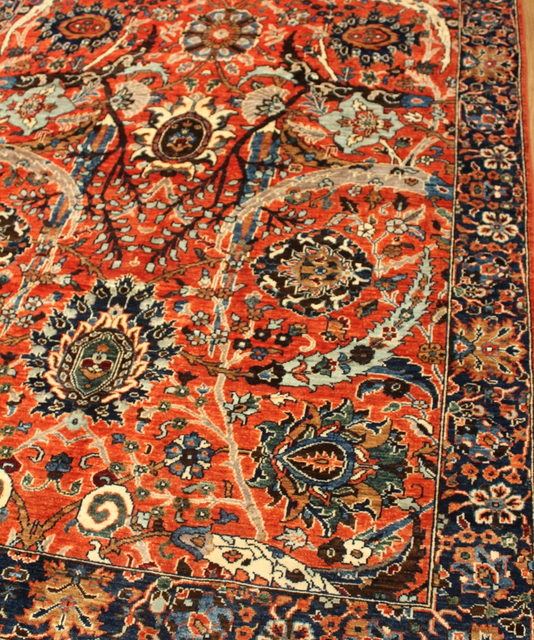
Style: Gabbeh
By Borokhim’s Oriental Rugs · Madison, Wisconsin
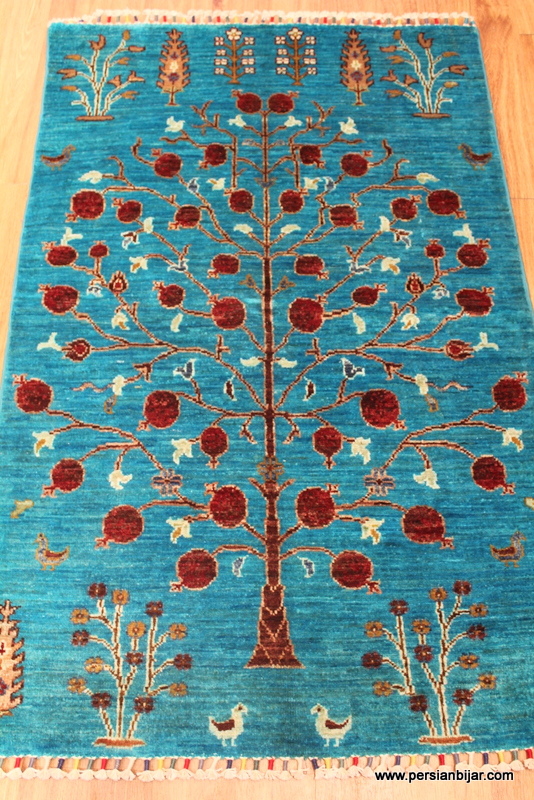
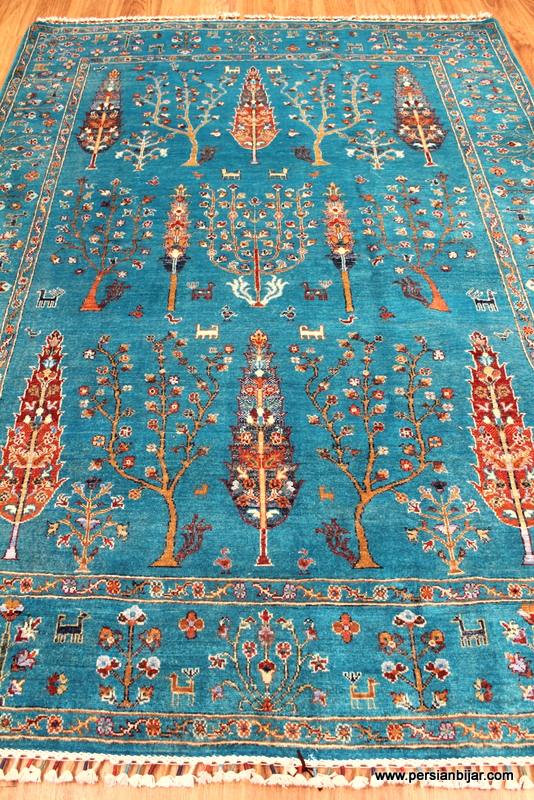
A Gabbeh looks like nothing else in a rug shop. Where a city rug is all fine detail, a Gabbeh is a field of glowing color with a few small figures scattered across it: a tree, a goat, a row of tiny people. It is thick, soft and cheerful, and it happens to suit modern rooms better than almost any other hand-knotted rug.
This guide explains who makes Gabbeh rugs, why they look the way they do, the different types, and how to choose one.
| Origin | Nomadic Qashqai and Luri weavers of south-western Iran |
| Look | Open fields of color with simple geometric, animal and tree motifs |
| Materials | Thick, handspun wool pile on a wool foundation |
| Feel | Deep, plush and soft underfoot |
| Colors | Rich reds, blues, golds and greens, often with natural variation |
| Also made in | India, Pakistan and other weaving regions, in the Gabbeh style |
| Best for | Family rooms, bedrooms, children’s rooms, modern interiors |
Rugs made for the weaver’s own tent
Gabbeh rugs come from the Qashqai and Luri peoples of south-western Iran, nomads who move their flocks through the Zagros mountains with the seasons. The women of these tribes wove Gabbehs for their own families, as bedding and floor coverings against the mountain cold. That is why the pile is so thick.
The word itself is usually explained as meaning something raw or natural. These were not rugs made to a merchant’s order. The weaver used the wool from her own sheep, spun it by hand, and worked without a pattern, putting in whatever she pleased.
For a long time the rug trade ignored them as too coarse. That changed in the second half of the twentieth century, when buyers in Europe and America noticed how well these simple, colorful rugs sat with modern furniture.
Why a Gabbeh looks the way it does
- Open fields. A large area of one color, rarely perfectly even, is the heart of the design.
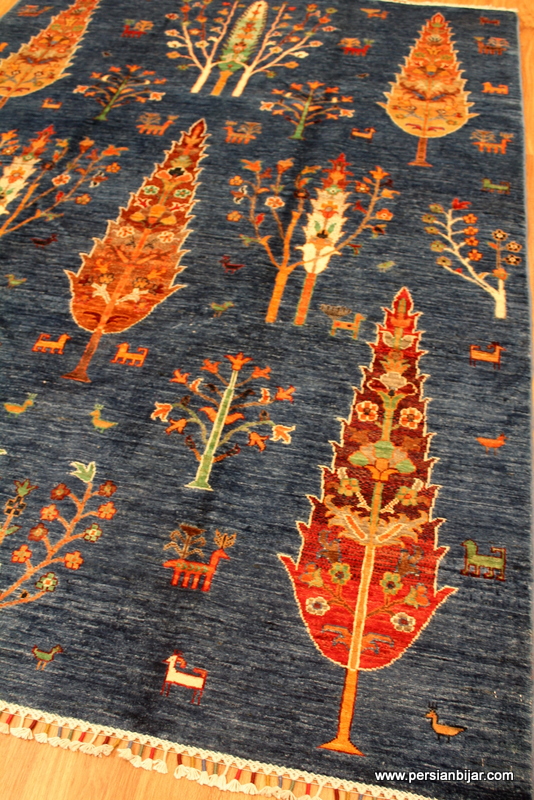
- Small figures. Goats, sheep, birds, people, trees and simple diamonds, placed wherever the weaver chose.
- Living color. Handspun wool takes dye unevenly, so a red or blue field ripples with lighter and darker shades. This is abrash, and in a Gabbeh it is the whole point.
- A deep pile. The wool is left long, which gives the rug its soft, cushioned feel.
- No two alike. Each rug is one person’s idea, woven once.
Types of Gabbeh
Why Gabbehs suit modern rooms
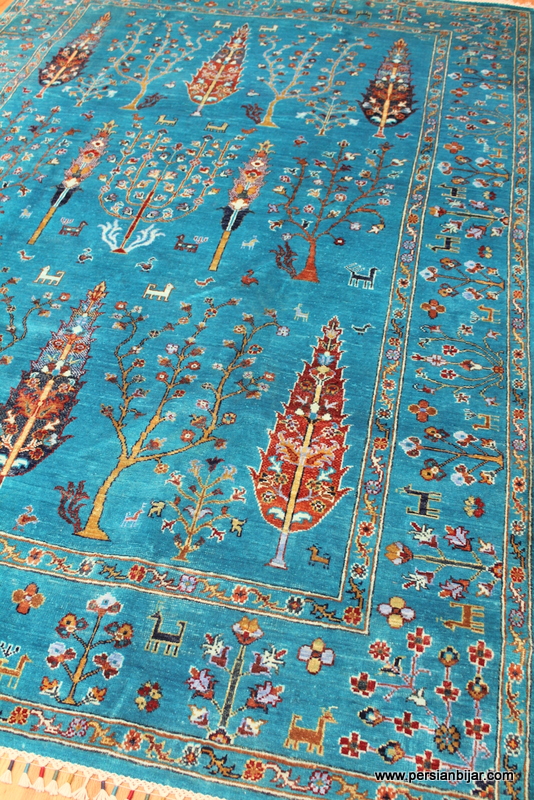
A Gabbeh has what a modern room usually lacks: warmth, texture and something made by hand. Because the design is so simple, it does not fight with clean-lined furniture or bold artwork. A single-color Gabbeh with a few small figures can do the job of a plain modern rug while being far more interesting to look at.
They are also friendly rugs to live with. The deep wool pile is soft enough for children to play on, and thick enough to feel warm on a hard floor.
How to choose a Gabbeh
- Feel the wool.It should be soft, springy and slightly glossy, never dry or scratchy.
- Look at the color.Gentle variation across the field is a good sign of handspun, hand-dyed wool.
- Ask where it was woven.Persian tribal Gabbehs and Gabbeh-style rugs from India or Pakistan are both good rugs. You should know which you are buying.
- Check the back.Individual knots should be visible, and the back should look hand-made, not perfectly regular.
- Pick the one that makes you smile.With a Gabbeh, that really is the best guide.
Caring for a Gabbeh
- Expect a little shedding at first. New handspun wool sheds loose fibers for the first few months. It settles down.
- Vacuum with suction only. A rotating brush pulls at the long pile.
- Rotate it once or twice a year, because a thick pile shows traffic paths.
- Use a pad on hard floors.
- Blot spills quickly. Good wool is naturally stain-resistant if you act at once.
Not sure what size you need? Our rug size guide gives simple rules for every room.
Common questions
What does Gabbeh mean?
It is usually explained as raw, natural or uncut, a reference to the thick, simple rugs nomadic weavers made for their own use.
Are Gabbeh rugs good quality?
Yes. They are loosely knotted compared with city rugs, but the thick, good wool makes them comfortable and long-lasting.
Are all Gabbeh rugs from Iran?
No. The originals are Persian tribal rugs. Gabbeh-style rugs are also hand-knotted in India, Pakistan and other regions.
Why is the color in my Gabbeh uneven?
Handspun wool absorbs dye unevenly, which creates soft bands and patches of shade. It is intended and admired.
See our Gabbeh rugs
Borokhim’s Oriental Rugs has served Madison since 1972. Browse our collection of hand-knotted Gabbeh and modern rugs online.
