 Borokhim's Oriental Rugs on
Persian Isfahan Rugs: The Finest Weaving of the Old Royal Capital
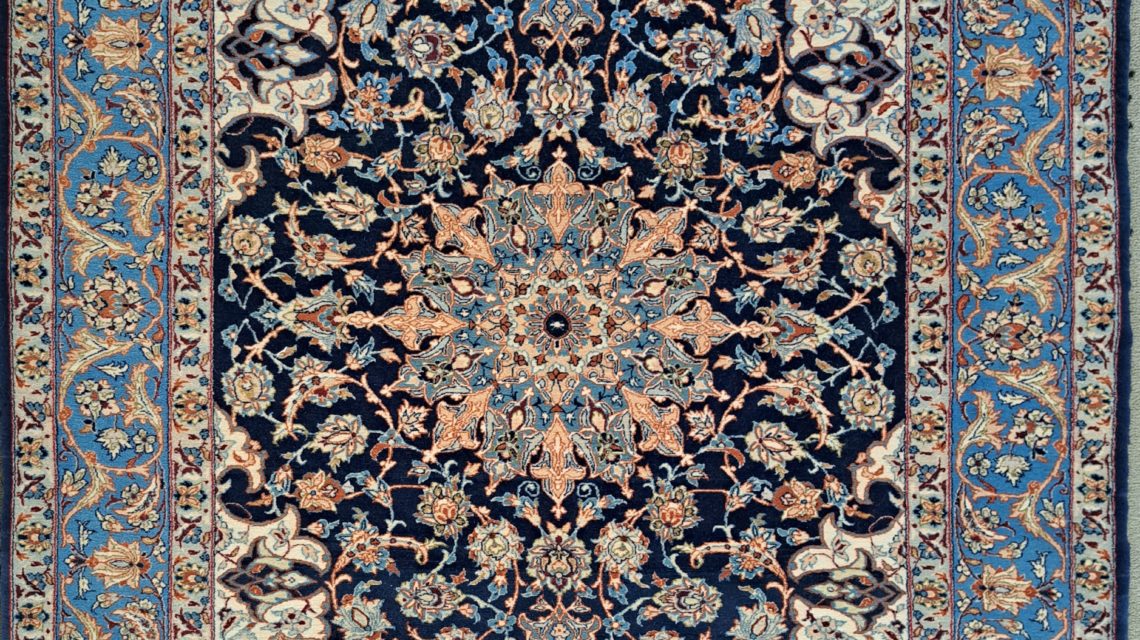
Style: Isfahan
By Borokhim’s Oriental Rugs · Madison, Wisconsin
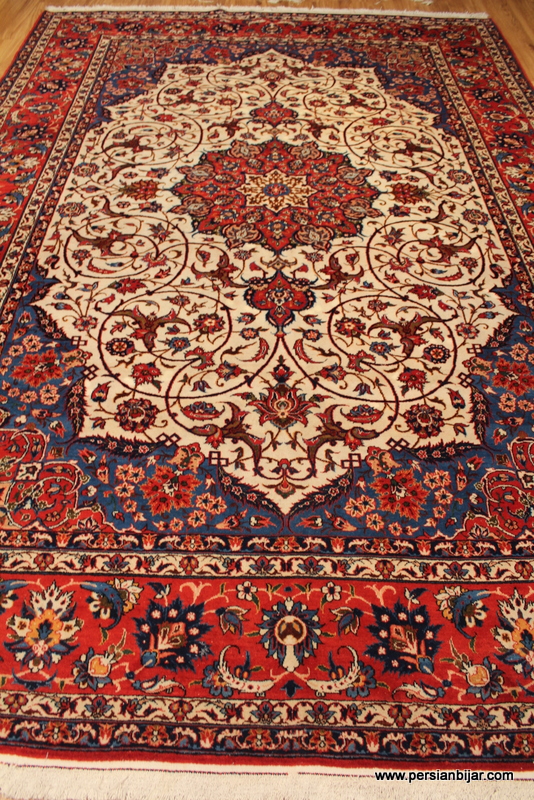
Isfahan rugs sit at the top of Persian weaving. They are knotted so finely that the pattern looks drawn with a pen, in fine wool with silk highlights and often on a silk foundation. A good Isfahan is as much a work of art as a floor covering, and many are treated that way.
This guide explains why Isfahan holds that place, what goes into one of these rugs, and how an Isfahan differs from its close cousins, Nain and Kashan.
| Woven in | The city of Isfahan, central Iran |
| Look | Extremely fine floral designs around a central medallion |
| Materials | Fine wool pile with silk highlights, on a silk or cotton foundation |
| Knot | Asymmetric (Persian), several hundred to the square inch in fine pieces |
| Colors | Ivory, blues and reds in a balanced, refined palette |
| Sizes | Mostly small to medium, with some room-size carpets |
| Best for | Formal rooms, bedrooms, studies, or hanging on a wall |
The old royal capital
In 1598 Shah Abbas the Great moved the Persian capital to Isfahan and set about making it one of the most beautiful cities in the world. He built the great square, the blue-tiled mosques and the palaces that still stand there, and he founded royal workshops where the best designers and weavers in the country made carpets for the court.
Weaving in Isfahan faded after the city fell to invaders in 1722, and it was revived in the early twentieth century. The rugs we call Isfahan today come from that revival. Their makers took the old court carpets as their standard, and the best of them come close to it.
What goes into an Isfahan
- Fine wool. The pile is made from soft, carefully chosen wool, often the fine fleece from the neck and shoulders of the sheep.
- Silk foundation. Many of the best Isfahans are knotted onto silk warps. Silk is strong and very thin, which lets the weaver fit more knots into every inch.
- Silk highlights. The outlines of flowers and vines are often picked out in silk, so they shine against the wool.
- A very high knot count. Fine pieces have several hundred knots to the square inch. A rug of modest size can take a team of weavers a year or more.
- A short pile. The wool is clipped low so that every detail of the pattern shows clearly.
A design that mirrors the city
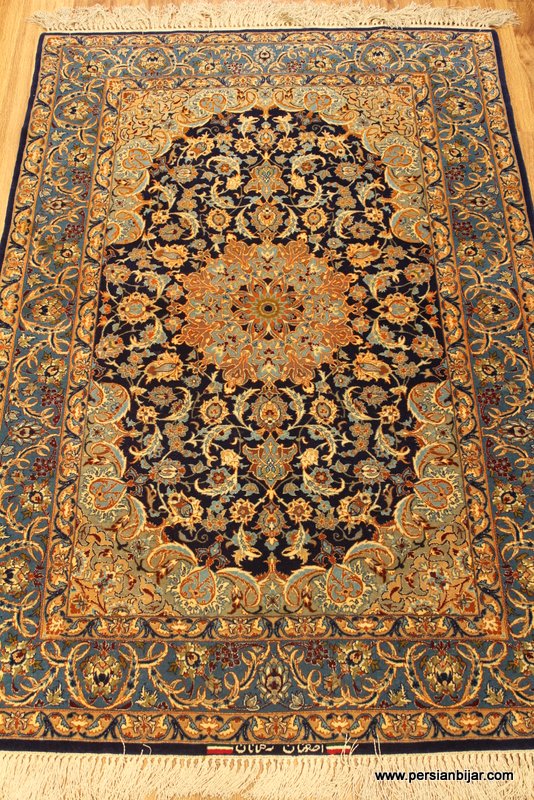
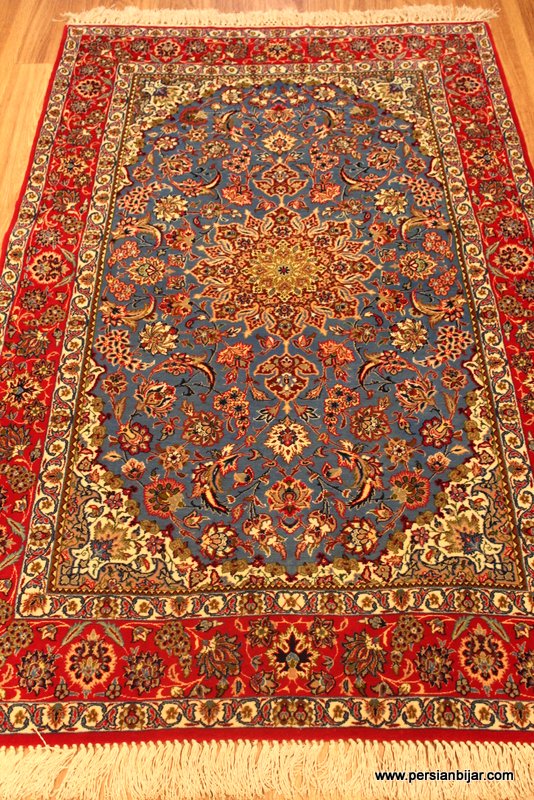
The typical Isfahan design is a central medallion on a field of curling vines and palmettes, framed by a wide main border. It is the Shah Abbas style in its purest form. The medallion echoes the tiled domes of the city’s mosques, and the vines follow the same spirals you see in the tilework on their walls.
You will also find tree and vase designs, garden and hunting scenes, and all-over floral patterns. Many Isfahan rugs carry the signature of the workshop woven into one end, a mark of pride that Seirafian and other well-known families made famous.
Isfahan, Nain or Kashan?
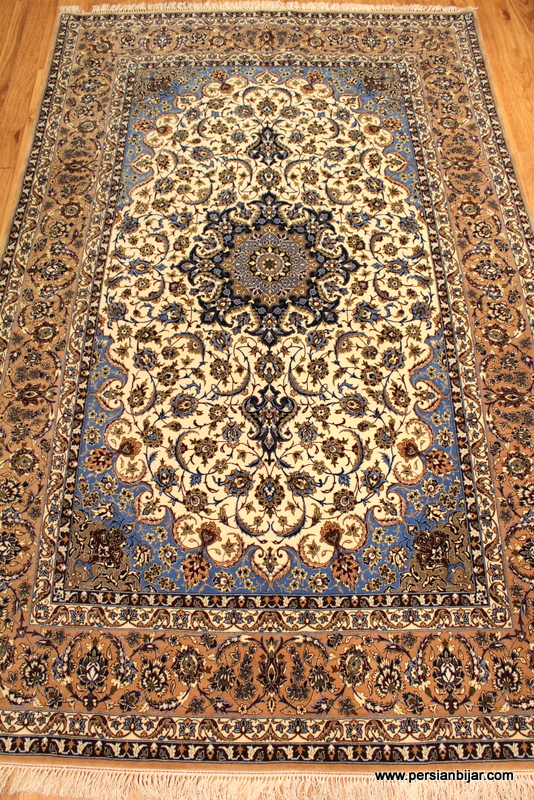
All three are fine floral city rugs from central Iran, and they are often confused. These are the usual differences.
| Isfahan | Nain | Kashan | |
|---|---|---|---|
| Palette | Balanced ivory, blue and red | Ivory, blue and beige, very light | Deep red and navy |
| Fineness | Very fine | Fine to very fine | Medium to fine |
| Silk | Highlights and often the foundation | Highlights, outlining the pattern | Rarely |
| Feel | Thin, supple, short pile | Thin, soft | Fuller, softer pile |
| Mood | Formal and precise | Light and calm | Warm and traditional |
We cover the other two in their own guides: Persian Nain rugs and Persian Kashan rugs.
How to recognize a fine Isfahan
- Look at the back.The pattern should be nearly as clear as on the front, with tiny, even knots.
- Check the fringe.Fine, glossy fringe threads usually mean a silk foundation.
- Tilt it in the light.Silk highlights shine where the wool stays matte.
- Study the curves.Vines should flow smoothly, with no visible steps.
- Look for a signature.A woven inscription at one end names the workshop.
Living with an Isfahan
A rug this fine deserves a calmer spot. It is at its best in a formal living room, a bedroom or a study, away from outdoor shoes and heavy traffic. Smaller pieces are often hung on a wall, where the detail can be seen at eye level.
Use a pad, keep the rug out of strong direct sun, rotate it once a year, and have it cleaned only by someone experienced with silk and fine wool.
Common questions
Why are Isfahan rugs so highly regarded?
Because of their fineness. The knot count, the quality of the wool and silk, and the precision of the drawing are among the highest in Persian weaving.
Do Isfahan rugs have silk in them?
Most fine ones do. Silk is used for highlights in the pile, and often for the foundation as well.
Can I use an Isfahan rug on the floor?
Yes, in a room with light to moderate use. It is not the right choice for a busy hallway or under a dining table.
What does the signature on an Isfahan mean?
It names the workshop or master weaver who made the rug. Signed pieces from well-known workshops are especially sought after.
See our Isfahan rugs
Borokhim’s Oriental Rugs has served Madison since 1972. Our Isfahan, Nain and Qum rugs are shown together online.
