 Borokhim's Oriental Rugs on
Persian Qum Silk Rugs: What Makes Them So Fine
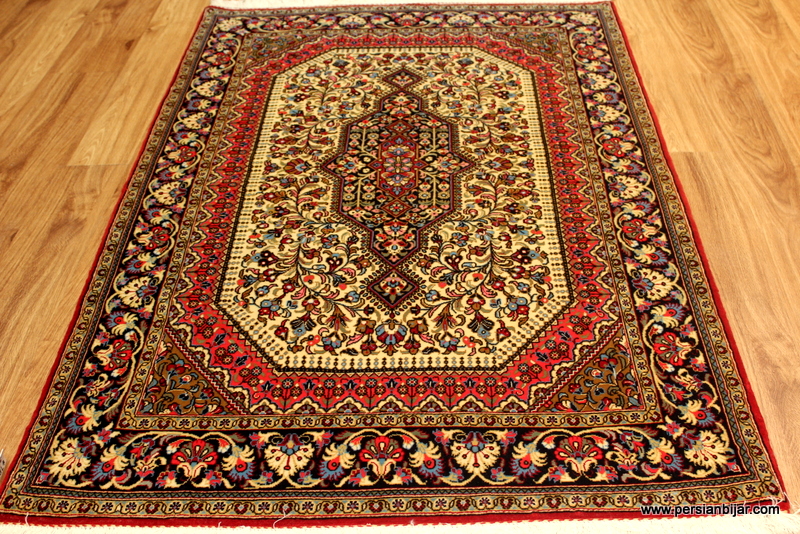
Style: Qum
By Borokhim’s Oriental Rugs · Madison, Wisconsin
A Qum rug is the jewel of a collection. Many are knotted entirely in silk, so finely that the pattern reads like a painting, with a sheen that changes as you walk around the rug. Others pair fine wool with silk for a softer effect. Either way, Qum stands for the most luxurious end of Persian weaving.
This guide covers how Qum came to make such rugs, what pure silk does, the designs to look for, and how to live with one.
| Woven in | The city of Qum, about 90 miles south of Tehran, Iran |
| Also spelled | Qom, Ghom, Ghoum |
| Materials | Pure silk on a silk foundation, or fine wool with silk highlights |
| Knot | Asymmetric (Persian), extremely fine |
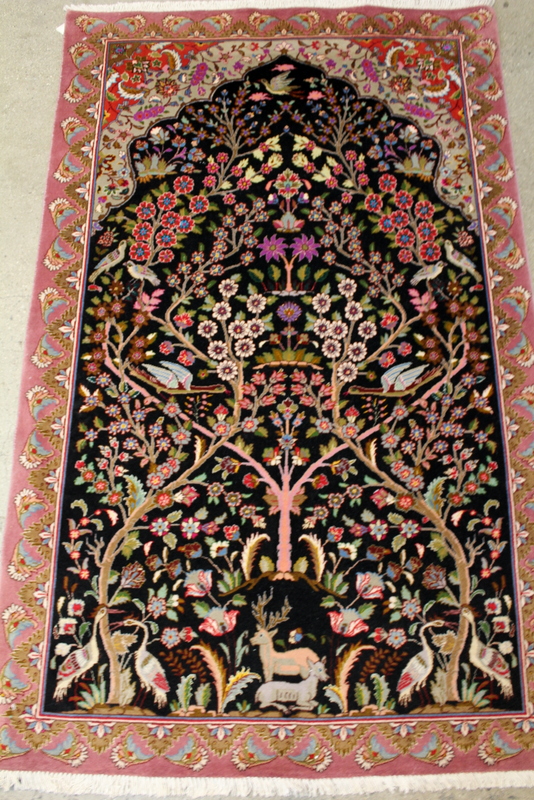
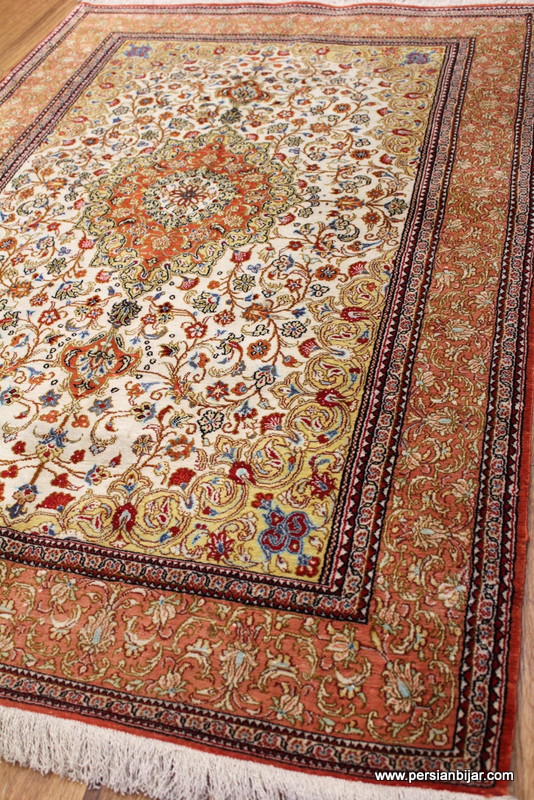
| Designs | Garden panels, medallions, trees and vases, hunting scenes |
| Sizes | Mostly small to medium |
| Best for | Quiet rooms with little traffic, or hanging on a wall |
A new center with no rules to follow
Qum is one of the holy cities of Iran, and for most of its history it was not a carpet town at all. Weaving began there only in the 1930s, when master weavers from nearby Kashan set up looms in the city.
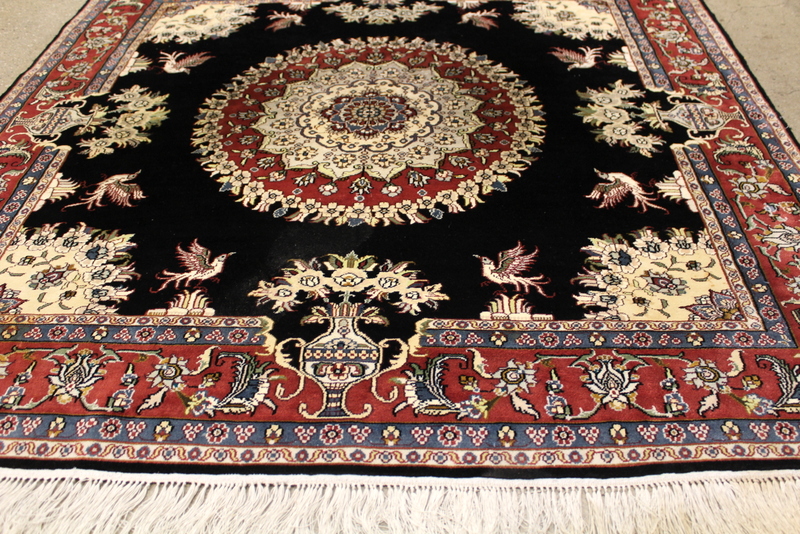
Having no old tradition turned out to be an advantage. Qum designers were free to borrow the best ideas from every part of Persia, the gardens of the south, the medallions of Isfahan, the hunting scenes of the old court carpets, and to weave them in the finest material they could find. Within a few decades the name Qum had come to mean silk.
What pure silk does
- Detail. A silk thread is far thinner than wool, so far more knots fit into each inch. Flowers, birds and inscriptions come out razor sharp.
- Sheen. Silk reflects light. Look at a silk Qum from one end and it appears light and bright. Walk to the other end and it looks deeper and richer. Rug people call these the light side and the dark side.
- Color. Silk takes dye brilliantly, which allows shades such as turquoise, rose and soft gold that are hard to achieve in wool.
- Lightness. A silk Qum is thin and surprisingly light, and it drapes like a heavy cloth.
Not every Qum is all silk. Many are knotted in very fine wool, with silk used for the highlights. These have a softer, more velvety look and are a little easier to live with.
Designs to look for
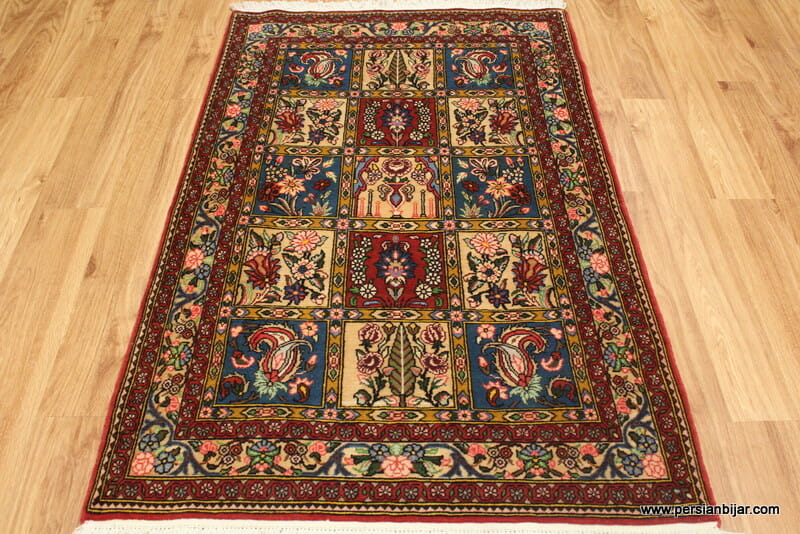
How to judge a Qum
- Turn it over.On a fine Qum the back looks almost like the front, with knots too small to count easily.
- Look at the fringe.In a silk rug the fringe is silk as well, because it is the end of the foundation threads.
- Walk around it.Real silk shows a clear change between the light side and the dark side.
- Look for a signature.Many Qum rugs carry the workshop’s name woven into a small panel in the border.
- Ask what it is made of, in writing.Rugs made from artificial silk exist. A reputable dealer will state plainly whether a rug is pure silk, wool and silk, or something else.
Living with a silk rug
Silk is strong, but a silk pile shows wear and soil sooner than wool, and it does not like damp. A Qum belongs in a room with little foot traffic, such as a formal sitting room, a bedroom or a study. Many owners hang them, which shows the design and the sheen to best effect.
- No outdoor shoes.
- Keep it dry. Blot any spill at once and call a specialist. Do not use water or household cleaners.
- Keep it out of strong sun.
- Vacuum gently, with suction only and no rotating brush.
- Professional cleaning only, by someone who works with silk.
For related rugs, see our guides to Isfahan rugs and Nain rugs.
Common questions
Are all Qum rugs made of silk?
No. Many are pure silk, but others are fine wool with silk highlights.
Is Qum the same as Qom or Ghom?
Yes. They are different spellings of the same city.
Can a silk Qum rug go on the floor?
Yes, in a room with light use and no outdoor shoes. For busy rooms, a wool rug is the better choice.
Why does my silk rug look different from each end?
The pile leans in one direction. Looking into the pile you see deeper color, and looking with it you see more shine. This is normal and a sign of real silk.
See our Qum rugs
Borokhim’s Oriental Rugs has served Madison since 1972. Our Qum, Isfahan and Nain rugs are shown together online.
